Work-life wellness has shifted from a perk to a performance essential even in a slower economy.
Wellhub’s State of Work-Life Wellness 2026 report (downloadable) highlights a straightforward reality: despite tighter hiring conditions, workers are prioritizing their well-being.
After surveying more than 5,000 full-time employees across 10 global markets, the data is clear — in an era of rising stress, burnout and rigid RTO mandates, wellness benefits have shifted from “nice to have” to baseline expectation.
And this shift matters, even in a cooling labor market. Holistic well-being programs aren’t just good for people, they’re a strategic lever for performance, loyalty and long-term stability.
Well-Being = Performance: The Data Speaks
Wellhub’s research shows that 89% of employees perform better when they prioritize their health.
During tough economic times, when productivity, stability and efficiency become critical, that kind of performance boost is a strategic advantage.
Moreover, data from their 2025 survey reveals some eye-opening insights:
- Work stress tops mental health concerns: Nearly half (47%) of employees say work stress is the primary cause of their declining mental health, more than concerns like inflation, information overload or AI-related anxiety.
- Well-being matters as much as pay: A striking 88% of employees say wellness support is as important to them as salary.
- Lack of well-being support impacts retention: 83% of employees said they’d consider leaving their employer due to a lack of attention to well-being, up from 68% in 2022.
- Wellness programs correlate to better outcomes: Among employees with a wellness program, 69% report their overall well-being as “good or thriving,” compared with 53% among those without a program. Meanwhile, 59% of those with wellness support say their wellness improved in the past year compared with just 38% of employees who lack a wellness program.
These aren’t peripheral insights. They show that well-designed wellness support reduces stress and burnout, improves overall health and strengthens loyalty even when people might otherwise be vulnerable to economic pressures.
Work-Life Wellness Trends for 2026 Backed by Evidence
According to Wellhub (and supported by broader industry signals), several themes define how effective wellness programs are evolving:
- Holistic programs are winning: Employees value more than gym access. Physical health, mental health, sleep, stress management and flexible work support are all part of modern wellness packages.
- Wellness is no longer optional: With the overwhelming majority treating wellness as important as pay, support expectations have shifted, especially among younger demographics.
- Mental health and stress relief matter more than ever: Work stress now tops the list of employees’ wellness concerns, driving demand for mental health resources such as therapy, counselling, mindfulness and flexible scheduling.
- Programs with structure perform better: The latest small- and medium-sized business (SMB)-focused wellness data from Wellhub shows that 66% of employees in SMBs with a formal wellness program report feeling “good or thriving,” compared to 40% in SMBs without one.
5 Reasons Why Investing in Wellness Makes Sense in a Slow Economy
It might seem counterintuitive: why spend when budgets are tight? But the data and reality suggest that wellness may be one of the smartest investments employers can make right now.
1. Protect productivity when every hour counts.
With 89% of employees linking well-being to better work performance, wellness programs help preserve output and focus, which is critical when companies need to do more with less.
2. Reduce long-term costs, especially healthcare and turnover.
Chronic stress, mental health challenges and burnout increase absenteeism and medical claims. Proactive well-being support can help mitigate those costs over time.
3. Retain key talent, even when there’s less turnover pressure.
High performers still have options, and data shows 83% of employees would consider leaving a company that neglects well-being.
4. Strengthen trust, morale and resilience.
During challenging times, employees watch how leadership responds. Consistent investment in well-being signals care and stability. Wellness programs that produce positive outcomes (better health, improved morale) help reinforce loyalty and engagement.
5. Gain high impact without high cost.
Well-being doesn’t always require heavy investment. Support via flexible schedules, workload alignment, access to wellness resources, or programs and services that enhance work-life balance can deliver high value at modest cost and still move the needle meaningfully.
The Ultimate Work-Life Balance Benefit
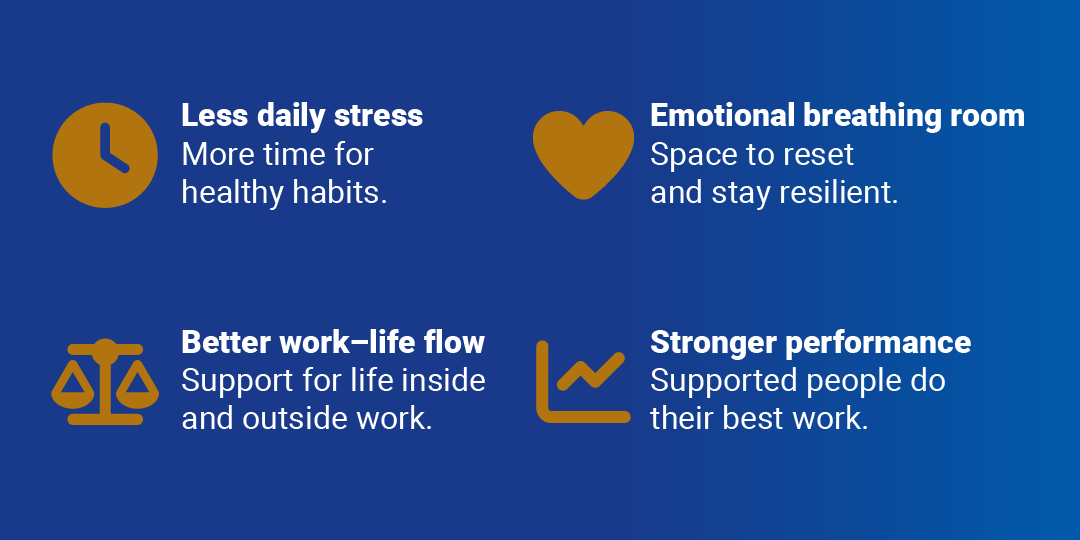
At Best Upon Request, we believe that the strongest wellness strategy is about eliminating daily stressors, helping employees reclaim time, and giving them space to focus on what really matters. Our concierge services for employees help companies deliver on the promise of well-being with real, practical support: Learn More.
Concierge Support Strengthens Employee Well-Being